Rekey or replace? What to do with your locks after you move in
You can't know how many copies of the old keys are out there, so the first job in a new place is deciding who still gets to open the door.
October 6, 2026 · 3 min read
Why the old keys matter more than the old locks
When you move into a house in Yakima, you get a set of keys and no way of knowing how many other sets exist. The previous owner may have handed one to a neighbor, a house cleaner, a contractor, or a cousin who never gave it back. Everyone involved may have been completely honest, and you still can't account for those keys. The lock itself might be in fine shape. What you want to change is who can open it.
How rekeying works
A standard pin tumbler lock has a row of small spring-loaded pin stacks inside the cylinder. The right key lifts every stack to exactly the same height, the cylinder turns, and the bolt moves. Rekeying means taking the cylinder apart, swapping the pins for a new combination, and cutting new keys to match. The hardware on your door stays where it is, and the old keys stop working.
Rekeying also lets you put every exterior door on a single key, so you aren't carrying a ring of four that all look alike. It's worth asking for at the counter. Not every lock brand rekeys the same way, so call ahead, describe what's on your doors, and ask whether yours can be done.
When replacing is the better call
Rekeying only helps if the lock underneath is sound. A worn lock that has been fighting you for years will keep fighting you with a new set of pins. Here are the signs that a new lock beats a fresh key:
- The deadbolt spins loosely in the door, or the whole lock wiggles when you turn the key.
- The bolt only throws if you lift or push the door while turning.
- The key sticks or needs jiggling even though it's a clean, freshly cut copy.
- The strike plate is screwed into thin door trim instead of the framing behind it.
- There's no deadbolt on the door at all, only a knob lock with a push button.
Adding a deadbolt where there isn't one
Valley Lock & Key lists drilling a door and installing a deadbolt among its residential services, and there's a photo on the shop's own site of their locksmith Jordan doing exactly that with a jig. The jig matters. It clamps to the door and guides the hole saw, so the large bore through the face of the door and the smaller bore into the edge both land square and centered. A deadbolt installed freehand tends to bind, because the bolt hits the strike at a slight angle and never quite slides home.
Doors differ, too. Solid wood, hollow steel, and fiberglass each take a hole saw a little differently, and a locksmith who does this daily knows how much pressure each one tolerates. One customer wrote in a Google review that James installed a garage door lock for them, came back to put in another deadbolt, and while he was there looked at two sticky doors and had both working smoothly in about ten minutes.
Key control, the step most people skip
Any hardware store kiosk can copy an ordinary house key in a minute. That's convenient when you need a spare and a problem when you've just rekeyed to shut out strangers. Restricted keyway systems use key blanks that aren't sold over the counter, so copies have to go through an authorized dealer. The shop displays an authorized Mul-T-Lock high security dealer sign over its counter, and it's a fair question to ask what restricted options exist for your doors.
A simple checklist for move-in week
- Count every exterior door, including the garage entry and any sliding door with a keyed latch.
- Test each lock with the key you were given, and note any that stick or feel loose.
- Decide which doors get rekeyed and which get replaced, then put them all on one key if you can.
- Ask about a deadbolt for any door that only has a knob lock.
- Hand out new keys deliberately, and write down who has one.
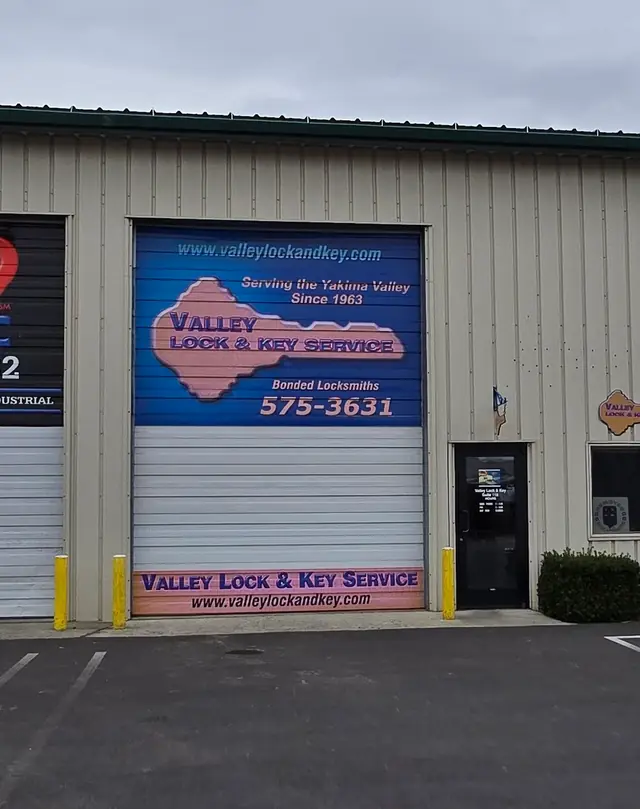
If you'd rather talk it through, call Valley Lock & Key at (509) 575-3631 or stop by the counter at 3402 W Washington Ave #118 in Yakima. The shop is open Monday through Thursday 8:00 AM to 4:30 PM and Friday 8:00 AM to 4:00 PM, and after hours service is available.
Valley Lock & Key Service, (509) 575-3631
Call (509) 575-3631More articles
Lost your only car key? How chip keys, remotes and FOBs actually work
Cutting the metal is the easy part of a modern car key, and the chip inside it is why the replacement takes more than a blank.
Why the back door of your shop keeps sagging, and what a continuous hinge fixes
If a door has been rubbing the frame for months, the hinges are carrying a load they were never built for.